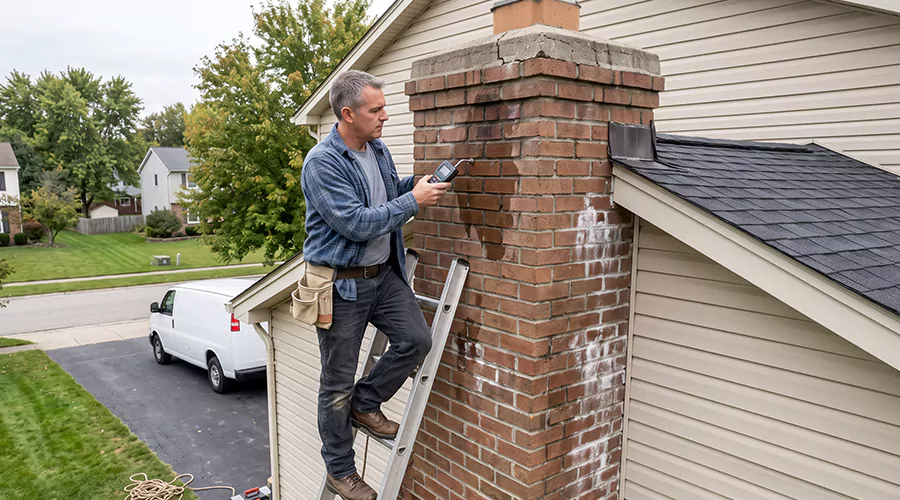
What Causes Water Damage Inside a Chimney?
Water entering a chimney can weaken mortar, damage the flue liner, and cause odors. Cracked crowns, damaged flashing, and missing caps are the most common causes.




Based on 500+ Reviews

Proudly American
Owned & Operated

Water damage inside a chimney is a common problem that can affect the chimney structure, fireplace, and surrounding areas of the home. Although chimneys are designed to handle outdoor exposure, constant contact with rain, snow, moisture, and temperature changes can eventually cause damage if the system is not properly protected. Water entering a chimney can damage masonry, weaken mortar joints, deteriorate the flue liner, create unpleasant odors, and lead to expensive repairs if the source of moisture is not corrected.
Understanding the common causes of chimney water damage helps homeowners identify problems early and protect their chimney system.
A chimney has several components designed to prevent moisture from entering, including:
When any of these components become damaged, worn, or improperly installed, water can find a path into the chimney.
Common causes of chimney water damage include:
The chimney crown is located at the top of a masonry chimney and helps direct water away from the structure. When the cracked chimney crown develops, water can enter the chimney from the top.
Common causes of crown damage include:
Water entering through crown cracks can travel down the chimney and affect:
Signs of chimney crown problems include:
Repairing crown damage early can help prevent further water intrusion.
Flashing is installed where the chimney meets the roof. Its purpose is to create a waterproof barrier and prevent water from entering around the chimney base. Damaged chimney flashing is one of the most common causes of chimney leaks.
Flashing problems may occur because of:
Signs of flashing failure include:
If flashing is damaged, water can enter between the chimney and roof structure.
The chimney cap protects the chimney opening from rain, debris, and animals. A damaged or missing cap can allow water to enter directly into the chimney.
Common chimney cap problems include:
Without proper protection, rainwater can collect inside the chimney and contribute to:
A properly functioning chimney cap is an important part of moisture protection.
Masonry chimneys absorb moisture naturally. Over time, repeated exposure to water can weaken bricks and mortar. In such cases, chimney masonry repair becomes necessary to restore the structure.
Common masonry problems include:
Water can enter through these openings and move deeper into the chimney structure. During freezing temperatures, trapped water can expand and worsen existing damage.
Signs of masonry water damage include:
Some chimneys require additional protection against moisture absorption. Without proper chimney waterproofing, masonry can absorb water like a sponge.
Waterproofing problems may occur because:
Signs of moisture absorption include:
Proper chimney waterproofing can help reduce water penetration while allowing trapped moisture to escape.
Not all chimney moisture comes from outside. Water can also develop from condensation inside the chimney. Condensation occurs when warm gases from the fireplace meet cooler chimney surfaces.
This can happen because of:
Condensation can contribute to:
An inspection can help determine whether moisture is coming from outside leaks or internal condensation.
The chimney liner protects the chimney structure from heat, gases, and moisture. A damaged liner can allow moisture to affect surrounding chimney materials.
Possible causes of liner damage include:
Signs of liner problems may include:
A damaged liner may require repair or replacement depending on the condition.
Some water problems begin because the chimney was not properly designed or installed.
Issues may include:
Installation problems can allow water to enter even when components appear relatively new.
Water damage may not always be immediately visible. Common warning signs include:
| Sign | Possible Cause |
|---|---|
| Water stains near fireplace | Flashing or crown problems |
| Musty odors | Moisture buildup |
| Crumbling mortar | Masonry deterioration |
| Rust stains | Water exposure |
| Damp fireplace area | Internal leaks |
| White stains on bricks | Moisture movement |
| Peeling paint nearby | Water intrusion |
If these signs appear, the chimney should be inspected.
Ignoring water intrusion can lead to larger problems.
Possible consequences include:
Water damage often becomes worse over time because moisture continues entering the structure.
Regular maintenance can help reduce moisture problems.
Helpful steps include:
Preventing water entry is usually easier than repairing extensive moisture damage.
Yes. Water problems should not be ignored because moisture can continue damaging chimney components.
The repair needed depends on the source of the leak.
| Problem | Possible Repair |
|---|---|
| Cracked crown | Crown repair |
| Damaged flashing | Flashing repair or replacement |
| Broken cap | Cap replacement |
| Cracked masonry | Masonry repair |
| Damaged liner | Liner repair or replacement |
| Moisture absorption | Waterproofing |
A proper inspection helps determine the correct solution.
Water damage inside a chimney is usually caused by problems with moisture protection components such as cracked crowns, damaged flashing, missing chimney caps, deteriorated masonry, and poor waterproofing. Because water damage often develops slowly, small leaks can become larger structural problems if they are ignored. Regular chimney inspections and timely repairs help protect the chimney system and prevent expensive damage.
Maintaining chimney components that block moisture is one of the best ways to keep a fireplace system working properly.
Water inside a chimney may be caused by a damaged crown, flashing problems, missing chimney cap, cracked masonry, or condensation.
Yes. A damaged chimney cap, crown, or flashing can allow rainwater to enter the chimney system.
Signs include water stains, musty odors, cracked masonry, rust, damp areas, and white stains on bricks.
Yes. The repair depends on the source of the moisture, such as crown repair, flashing repair, masonry work, or waterproofing.
A properly installed chimney cap helps prevent rain, debris, and animals from entering the chimney.
Regular inspections, maintaining chimney components, repairing cracks, and addressing damaged flashing can help prevent leaks.
Water entering a chimney can weaken mortar, damage the flue liner, and cause odors. Cracked crowns, damaged flashing, and missing caps are the most common causes.
